The Unedited Workplace: A Call for Human Intervention in AI "Productivity"
I want to tell you something I’ve been watching happen in slow motion, and I think you’ve been watching it too.
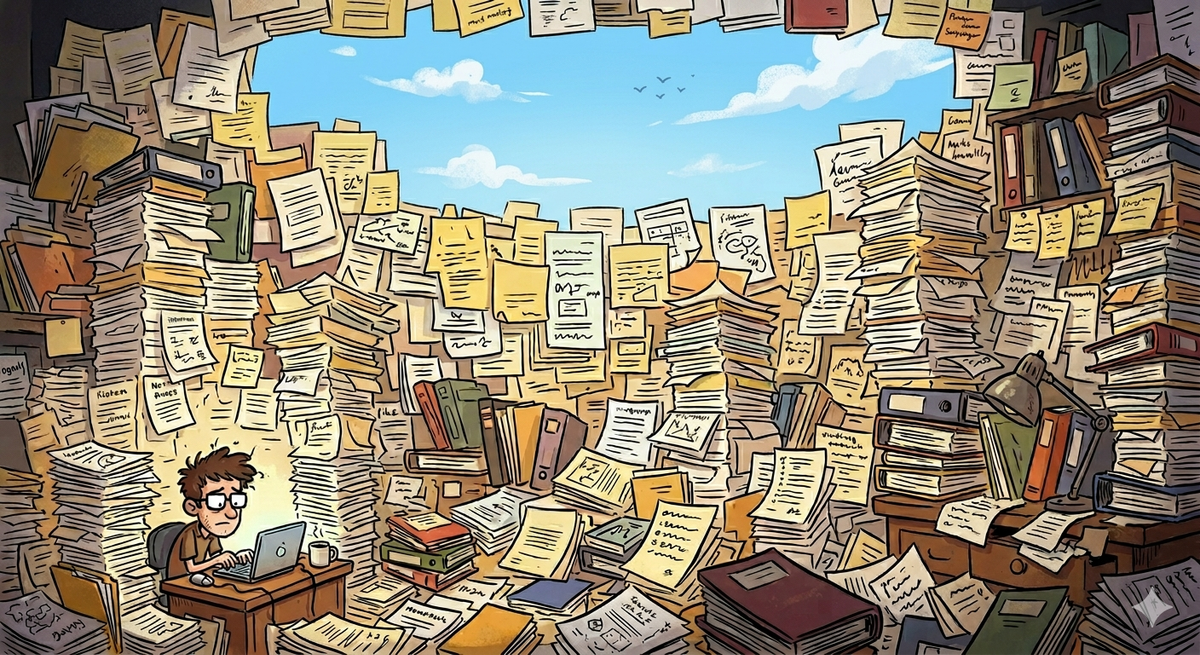
Artificial intelligence produces volume without friction: this is its greatest strength and the fatal flaw for humans wired to seek efficiency. It is fast, tireless, eager — always willing to add another feature, answer another question, generate another paragraph, another line of code, and add yet another feature. Because volume is now easy, and editing — which requires thinking — remains hard, we have arrived somewhere I’d been quietly dreading: the unedited workplace.
Walk through any office, scroll through any shared drive, and you’ll find it accumulating.
-Emails that say a great deal and communicate almost nothing.
-SOPs or "playbooks" nobody reads because they were written for completion, not comprehension.
-Apps built on top of automations nobody reviewed, connected to workflows nobody mapped.
The artifacts of a thousand moments when someone thought, "let the AI handle it" — and then moved on to the next thing. They didn't ask deeper questions. They pushed aside their responsibility as human creator. Volume achieved. Value, not so much.
In such a world, "done" has become more alluring than excellence, velocity more important than validity.
The modern workplace is becoming defined by the volume of ideas not by their refinement. This is a dangerous place to be.
I see it where I work. And because I know something about human behavior, I know it’s happening in millions of workplaces around the world right now, in industries that would be horrified to hear themselves described this way. The consultancy. The bank. The hospital. The law firm. The nonprofit. We are all, in our own ways, becoming very efficient producers of content that does not matter.
The trap is seductive because it feels like productivity. That’s the cruelest part. You end the day having generated things — real things, attached to real projects, sent to real people. The sensation is indistinguishable from having done meaningful work. But feeling productive and doing valuable work are not the same experience.
We used to know this. The friction of production — the slow, resistant process of drafting and revising and reconsidering — was an irritant, yes, but it was also a forcing function. Difficulty created standards. Now the difficulty is gone, and without realizing it, we’ve let the standards go with it.
Putting a Lid on It
So what do we do? I don’t think the answer is Luddism, and I don’t think it’s discipline theater: posting a policy, holding a training, hoping people absorb the right values.
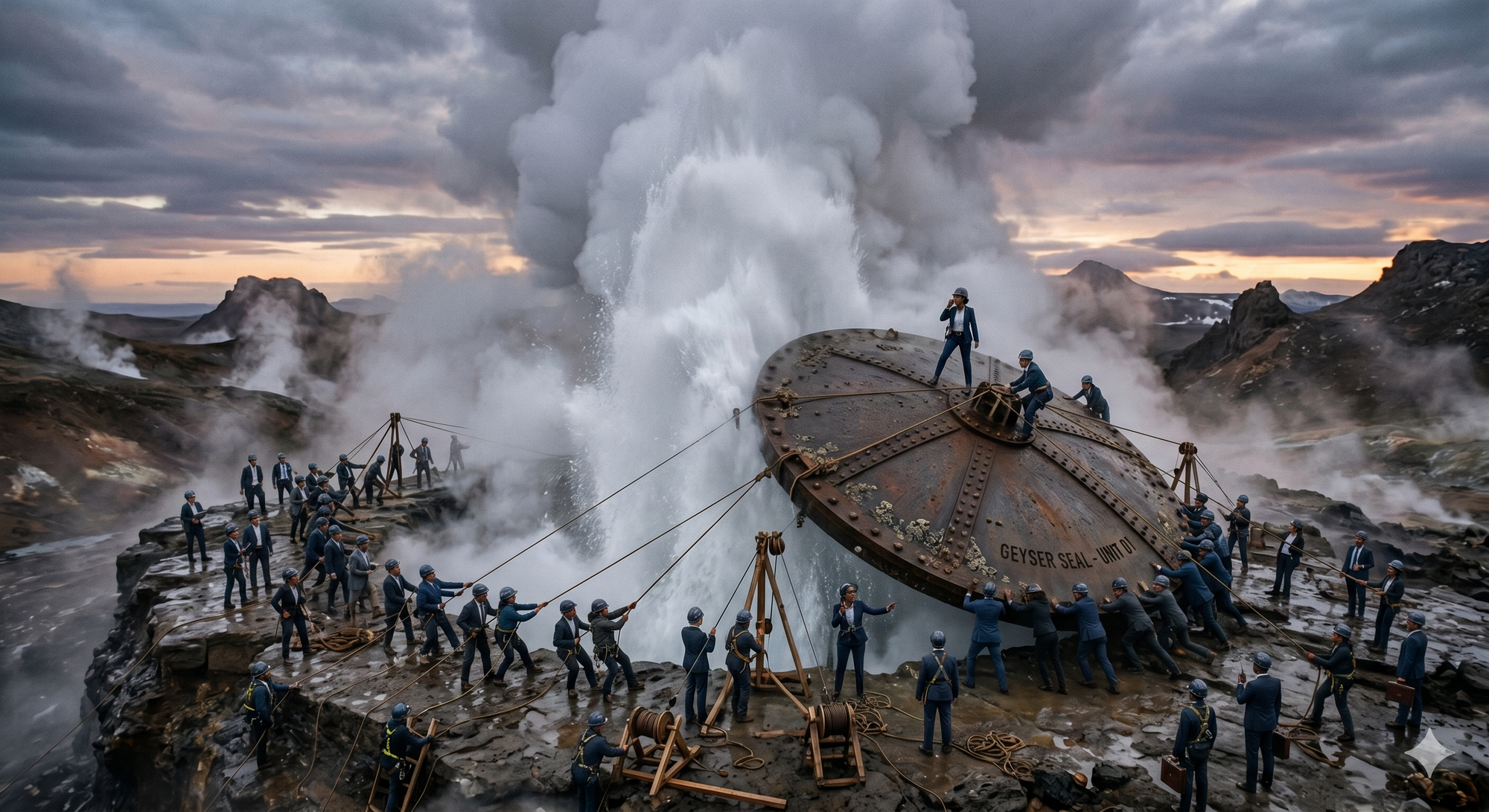
I think it starts with something more fundamental: remembering that we have agency if we choose to exercise it. We are the orchestrators and architects. The technology works for us. We are not obligated to accept everything it produces simply because it produced it quickly. We can put a lid on this geyser whenever we choose to--and we will have to.
From there, we have to develop a specific kind of attentiveness — the ability to notice when we’ve been seduced by its quick, seductive coherence.
We will catch ourselves in the sugar-rush of feigned productivity and ask the harder questions:
What are we ultimately trying to achieve here?
How will this actually be used?
What could go wrong if we ship this as-is?
These are not complicated questions; they are just inconvenient ones. They stop the sugar rush. If you ask them yourself, you might face ridicule from the productivity addicts around you. Inconvenience is no longer imposed on us automatically the way it once was: through slower processes, through waiting, through manual deliberation. We have to impose it on ourselves: inconvenience, once the enemy of productivity, becomes it's most vital ally.
Then comes the part most organizations are not remotely prepared for: rigorous review. Disagreement. Feedback. Editing. Track changes that will make someone cry or piss them off. Holding the work to a genuine standard — not a standard of quantity, which is trivially easy to meet now, but a standard of quality of thinking, quality of ideas, quality of what the work actually accomplishes.
This requires something rarer than a style guide or a checklist. It requires psychological safety and radical candor. We are going to have to be able to say to each other, clearly and without apology: “I appreciate the effort here, but this is not good enough.” We’re going to have to say it about the email that goes on three paragraphs too long. About the report that answers no question anyone actually asked. About the automation nobody tested because the AI made it seem done.
We are, all of us, just at the beginning of this. You can feel it if you pay attention — the level of the water rising. Past the waist. To the chest. Up toward the neck.
The unedited workplace is already here, already humming, already busy producing things nobody asked for in the first place, filling all the space.
The question is whether we’ll notice before we can no longer breathe.