The 7 Stages of the Client Journey

In consulting, we often treat "the sale" as an event—a binary switch that flips from No to Yes. But if you’ve been in the trenches of sustainability consulting or high-stakes corporate advisory for long, you know that’s a delusion. When I asked my wife to marry me, it was the culmination of a relationship journey without which I would have been laughed out of the room. It is the same with clients.
I still see many struggle because they do not understand this client journey and their role in it. Drawing on the insights of Doug Fletcher, author of How Clients Buy, below are Fletcher and his colleague's 7 stages of the client journey and what consultants can do to be truly helpful.
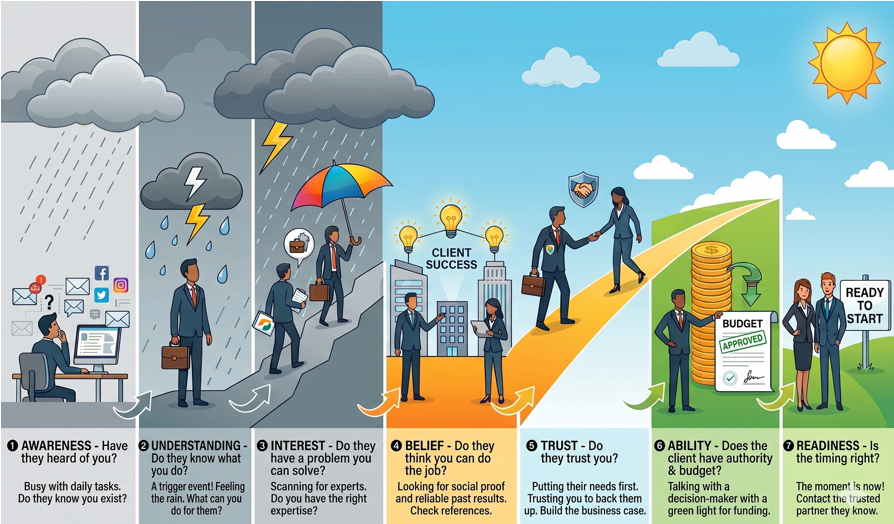
1. Awareness - Have they heard of you?
At this stage, the client doesn't even know they have a problem and they may not even know about you. They are operating. They are busy. They don't really have time for you. In fact, they don't even have time to see the clouds gathering on the horizon.
Think: emails, social media posts, referrals. Familiarity creates safety. If they know you or at least recognize your name, you might be worth it.
2. Understanding - Do they know what you do?
Something happens. A new regulation hits, an investor asks a question, a large customer sends a survey, or a competitor launches a new initiative. The gathering clouds are now overhead and they are feeling raindrops.
Don't sell solutions; ask questions. Aim to be helpful. Share helpful insights that act as a spark for new thinking. Help them name the risk they are facing. Might they need an umbrella?
3. Interest - Do they have a problem you can solve?
Now they are looking for help. They are scanning for experts who speak their business, not the expert's favorite jargon. They need to know you have the right expertise with their type of business. As the rain comes and the streams rise, urgency to select a trusted partner increases. It would be easiest to go with someone they already know and trust.
Don't waste their time with lengthy presentations on services and value propositions. Speak plainly about your team's expertise, unique approach and results. If you cannot help them, admit that and make a referral to someone better positioned to help in your network.
4.Belief - Do they think you can do the job?
The client begins to look for "social proof"—peers who have worked with you in the past. They ask their counterparts in industry consortia: "Who actually knows how to do this thing for me?. They aren't looking for the biggest firm; they are looking for the most reliable. Let your past results and your professional network speak for you.
Share concrete examples of solutions and results for similar clients. Offer to provide references. Publish thought leadership pieces that provide helpful insights free of charge.
5. Trust - Do they trust you?
Put yourself in their shoes. They are risking their reputation, their budget, and company time to work with you. What's more, the client has to justify the spend to a skeptical Board or boss. They need to know you put their needs first. The storm is raging now. Who will truly have their back vs. who is just trying to make the sale?
Get to know the client company and industry in depth. Equip them with the business case. Make them the hero of the story. Frame the investment as a means to not just achieve core business objectives, but their professional / career goals.
6. Ability - Does the client have the authority and budget?
Are you talking with a Decision-Maker or a Dreamer? This is a harsh reality that you need to be clear about. If your client contact is a Dreamer, this has just been a nice conversation in the rain. However, if they are a Decision-Maker and have budgetary authority, there is no telling the great work you can do together.
Address this topic head on. Ask: "who will ultimately make the decision whether you go ahead with this work or not?" "Is it in this year's budget or something you are looking help to put into next year's"?
7. Readiness - Is the timing right?
On the whole, people don't necessarily enjoy working with consultants. It's a pain to go through the process of scoping, selecting, managing the relationship, payment, and dealing with the endless meetings. People don't enjoy it until the time is right--then they jump right into it. And who will they contact? The person/firm they know, who has the right expertise, who has proven to show results and put their needs first, who they trust and who is responsive when they reach out.
When will this happen? You have no idea. Stay in relationship and provide value whether you are paid for it or not. When the moment comes, it is you they will look to first.